
If you’re in Georgia, New Jersey, Ohio, Connecticut, Maryland, Florida, Nevada, or Illinois, your state ranks among the ten highest for foreclosure filings in 2024. These states share common vulnerabilities—adjustable-rate mortgage exposure, rising insurance costs, prolonged judicial timelines, and weakening local labor markets. Foreclosure starts have climbed sharply past pre-pandemic levels as moratoria expired and lenders reactivated pipelines. Each state’s risk factors look different, and the details below break down exactly what’s driving the numbers.
Key Takeaways
- Foreclosure rates are measured as filings per 10,000 housing units, enabling fair comparisons across states regardless of population size.
- Nevada, Florida, Georgia, Maryland, Illinois, Connecticut, Ohio, and New Jersey consistently rank among states with the highest foreclosure rates.
- Pandemic moratoria have fully expired, reactivating lender foreclosure pipelines and pushing filing rates sharply higher through 2024.
- States with more adjustable-rate mortgages, weaker labor markets, and high property taxes face the steepest foreclosure increases.
- Regional factors like Florida’s soaring insurance costs and Illinois’s population loss compound mortgage stress beyond standard affordability pressures.
Why Foreclosure Rates Are Climbing Again in 2024

At the same time, elevated inflation and regional job losses are fueling rising delinquencies you should monitor closely. With pandemic-era moratoria fully expired, lenders have reactivated foreclosure pipelines—pushing starts and completions sharply higher through 2023 into 2024. States carrying larger shares of adjustable-rate mortgages and weaker labor markets are absorbing the steepest increases, creating urgent needs in the communities you serve.
How We Ranked the Worst States for Foreclosures
To build our rankings, we measured each state’s foreclosure rate as the share of homes receiving at least one foreclosure filing—default notices, scheduled auctions, or bank repossessions—over the most recent 12-month period. We pulled figures from public county court records, MLS reports, and proprietary real-estate databases.
Through data normalization, we converted raw counts into filings per 10,000 housing units, so you’re comparing apples to apples regardless of state size. We also flagged differences in legal timelines between judicial and nonjudicial states, since procedural speed can skew filing rates up or down relative to actual completed foreclosures.
Finally, we tracked year-over-year percentage-point changes so you can spot where conditions are worsening fastest and direct your resources accordingly.
8: Nevada – A Boom-Era Foreclosure Crisis That Lingers
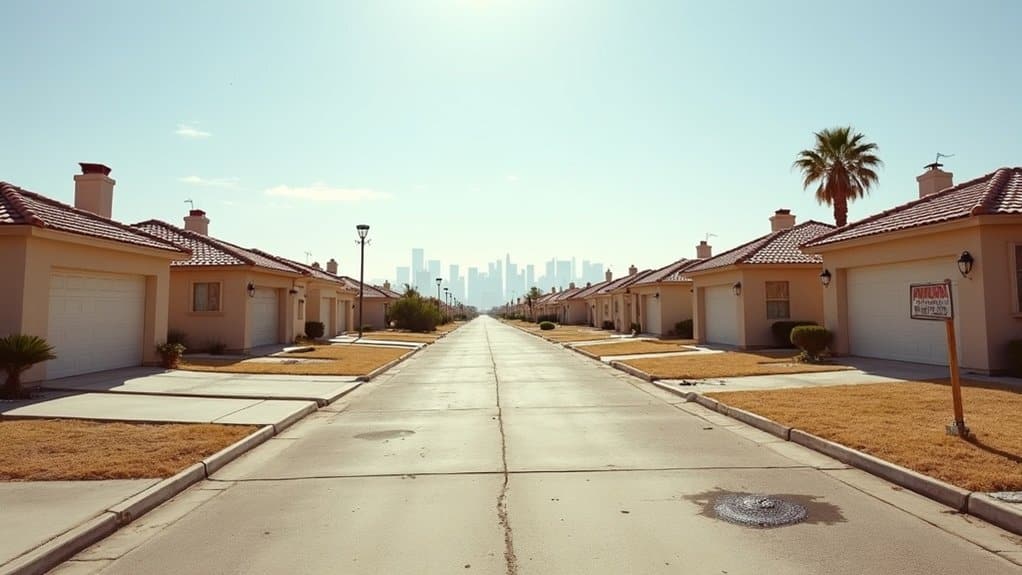
Nevada stands out as one of the starkest examples of boom-era excess turning into prolonged foreclosure pain. During the housing bubble, rapid construction flooded the market with speculative inventory, and when prices collapsed after 2007, foreclosure rates exceeded 5% in some metro areas.
Clark County bore the heaviest burden. You’ll find that underwater mortgages, high unemployment in construction and tourism, and concentrated distressed sales drove prices down further. By 2012–2014, Nevada still ranked near the top nationally for foreclosure starts. Many neighborhoods faced persistent blight, where a vacant lot or abandoned property signaled slow recovery.
Even into the late 2010s, elevated vacancy rates and longer time-to-sale for distressed homes reminded communities that boom-era consequences don’t disappear quickly.
7: Florida – Insurance Costs Push Homeowners to the Edge
Florida’s foreclosure pressures aren’t just about housing prices—they’re increasingly driven by insurance costs that have spiraled out of control. You’re looking at a state where homeowners face premiums exceeding $4,000 annually—roughly double the national average.
Consider what’s squeezing Florida homeowners:
- Double-digit annual premium hikes fueled by rising reinsurance costs and shrinking global capacity
- Rising deductible policies that shift more catastrophe risk onto your shoulders
- Citizens Property Insurance now covering over a million policies, concentrating state-level financial exposure
- Coastal migration pressures as insurers pull back from high-risk markets, limiting coverage options
- Tighter mortgage qualification barriers as inflated insurance costs push monthly housing expenses beyond affordability thresholds
These compounding trends leave cash-strapped and under-insured homeowners increasingly vulnerable to foreclosure when the next hurricane season hits.
6: Maryland – Wealth on Paper Hides Real Foreclosure Pain
Statewide price appreciation masks sharp local disparities. While affluent suburbs post strong gains, urban and rural pockets endure elevated foreclosure inventory and prolonged time-to-sale for distressed properties. Federal forbearance and state loan modification programs have softened the blow, but they haven’t closed the gap for Maryland’s most vulnerable homeowners.
5: Illinois – High Taxes and Population Loss Collide
When high taxes collide with sustained population loss, foreclosure pressure builds fast—and Illinois illustrates this dynamic more starkly than almost any other state.
You’re looking at a state where the tax burden ranks among the nation’s top 10 per capita, squeezing homeowners already facing stagnant wages. Combine that with population decline spanning most of the last decade, and you’ve got weakened demand driving values down.
- Cook County and collar counties posted foreclosure rates well above national averages post-recession
- Unpaid pension liabilities depressed property values, pushing loan-to-value ratios higher
- Manufacturing and retail job losses triggered foreclosure spikes several times the state median
- Downstate counties lost residents consecutively from 2010 to 2020
- Municipal fiscal crises further eroded homeowner equity
If you’re serving clients here, track these converging pressures closely.
4: Connecticut – Cost of Living Meets Wage Stagnation

Connecticut’s median home prices hovered around $385,000 in 2023—well above the national median—yet real wage growth across the state lagged the U.S. average for much of the prior decade, squeezing your ability to keep up with mortgage payments. You’ll find the highest foreclosure concentrations in post-industrial cities like Waterbury, Bridgeport, and New Britain, where lower average wages and elevated unemployment amplify housing distress. When you add Connecticut’s per-capita property tax burden—among the nation’s steepest—the gap between what homeowners earn and what they owe widens fast.
High Living Expenses
Residents in Connecticut consistently face some of the steepest living expenses in the nation, with the Council for Community and Economic Research pegging 2023 cost-of-living index values roughly 20–30% above the national average across housing, groceries, and utilities.
If you’re tracking where households struggle most, consider these key pressures:
- Median home prices exceeded $360,000 in 2022, limiting entry for first-time buyers
- Urban affordability challenges hit hardest in Stamford and Hartford, where rents far surpass national medians
- Property tax rates rank among the nation’s highest, eroding disposable income
- Utility burden compounds monthly expenses, pushing budgets to the breaking point
- Grocery costs trend well above average, straining families already managing tight margins
These compounding expenses leave little financial cushion, making homeowners increasingly vulnerable to foreclosure when unexpected disruptions arise.
Stagnant Wage Growth
Paychecks in Connecticut have consistently failed to keep pace with the state’s rising cost of living, creating a slow-building financial squeeze that pushes more homeowners toward default. Real wages for non-supervisory and service-sector workers have remained largely flat for decades, while median rents climbed 12–15% between 2010 and 2020 alone.
You’ll find this gap hits hardest among workers without a college degree, whose real wages haven’t meaningfully budged. Meanwhile, the state’s median home values run 30–50% above national figures, and healthcare and childcare costs rank among the nation’s highest. The result: even households earning moderate incomes see their purchasing power eroded markedly. When you’re already stretched thin, one unexpected expense can tip the balance from current to delinquent.
3: Ohio – Rust Belt Job Losses Still Drive Foreclosures
Because Ohio’s economy has long depended on manufacturing, Rust Belt job losses—particularly in counties like Cuyahoga and Mahoning—have been a persistent driver of the state’s elevated foreclosure rates. Manufacturing decline since the 1980s gutted local employment, and you can trace the fallout directly through foreclosure data.
Ohio’s manufacturing collapse didn’t just eliminate jobs—it carved a foreclosure crisis directly into the state’s Rust Belt communities.
- Toledo and Youngstown metros ranked among Ohio’s hardest-hit zip codes between 2007–2012
- Older industrial neighborhoods saw property values drop faster than statewide medians, deepening mortgage distress
- Steel and auto parts production losses triggered unemployment spikes that correlated with foreclosure surges
- Neighborhood blight accelerated in legacy cities where underwater homeowners couldn’t recover equity
- Columbus’s diversified economy offered a counterexample, recording comparatively lower foreclosure pressure
If you’re serving communities in these areas, you’ll find recovery remains uneven well into the 2010s.
2: New Jersey – Why Foreclosures Drag on for Years Here

If you’re serving clients steering through this market, you should factor these extended timelines into every investment analysis. Properties trapped in New Jersey’s foreclosure pipeline represent capital locked up far longer than the national average suggests.
1: Georgia – Sprawling Suburbs With the Shakiest Mortgages
Chasing affordable square footage in Atlanta’s sprawling suburbs pushed thousands of buyers into adjustable-rate and interest-only mortgages that eventually detonated across Georgia’s foreclosure landscape. Aggressive suburban lending in Cobb, Gwinnett, and Henry counties fueled speculation, and when mortgage resets hit, families couldn’t keep up.
When cheap land met easy money, Atlanta’s outer suburbs became ground zero for Georgia’s foreclosure crisis.
Between 2006–2010, metro Atlanta consistently outpaced national foreclosure averages. Here’s what drove the crisis:
- Subprime saturation in fast-growing outer suburbs
- Stated-income loans requiring minimal borrower verification
- Speculative flipping inflating home values beyond sustainability
- Plummeting equity trapping homeowners underwater
- Uneven recovery leaving exurban communities still struggling with vacancies
You’ll notice Georgia’s hardest-hit areas share a pattern: loose standards met unchecked growth. If you’re serving buyers in these markets today, understanding that history protects the families you guide.
Frequently Asked Questions
Which State of the US Is Me?
“ME” is the postal abbreviation for Maine. If you’re tracking housing insecurity trends, you’ll find Maine doesn’t typically rank among the highest foreclosure states, but pockets of vulnerability persist in rural counties where home values lag behind national recovery data. You can make a difference by connecting struggling homeowners with mortgage assistance programs that reduce default risk. Monitoring quarterly foreclosure filing trends helps you identify where community support efforts matter most.
Which States Have I?
You’ll find that Nevada, Florida, Arizona, California, and Michigan consistently top foreclosure lists. These states experienced severe mortgage delinquency surges during the 2007–2012 crisis, with Nevada exceeding 10 filings per 1,000 units. Speculative buying and collapsing housing affordability drove these trends. By understanding which markets remain vulnerable, you’re better equipped to serve affected homeowners and communities, helping them navigate recovery and build lasting financial stability.
What Is the Least Visited State in the US?
You’ll find that Alaska and Wyoming consistently rank as the least-visited states, driven by their remote locations, limited infrastructure, and small rural population. Vermont also sees significant tourism decline compared with major destinations, attracting only about 4.5 million domestic visitors annually. If you’re looking to serve undervisited communities, these markets present real opportunities—data shows vast gaps in visitor spending that you can help bridge through targeted outreach and investment.
What Is the Oldest US State?
Delaware holds the distinction of being the oldest US state, ratifying the Constitution on December 7, 1787. As an oldest colony turned landmark of original statehood, it’s set trends that you can’t ignore. You’ll find Pennsylvania, New Jersey, Georgia, and Connecticut followed closely behind. When you’re serving communities through real estate or policy work, understanding these foundational data points helps you better connect with each state’s unique historical market identity.
Conclusion
If you’re living in one of these ten states, you’ll want to watch your local housing data closely. Foreclosure trends don’t reverse overnight—they’re driven by deep structural issues like wage stagnation, insurance spikes, and lingering debt cycles. You can’t ignore the numbers: rising rates signal market corrections ahead. Whether you’re a homeowner or investor, you’ll need to factor these risks into your financial strategy for 2025 and beyond.